
Evidence-based dietary patterns to improve glycaemic control and reduce cardiovascular risk.
We commonly see people recently diagnosed who have been advised to lose weight and improve their diet without specific guidance on how to do so, and who are seeking a defined plan.
We also see people whose HbA1c has risen progressively over several years despite escalating pharmacotherapy, and who have not previously received structured dietary support alongside it.
Many are concurrently managing hypertension, dyslipidaemia or hepatic steatosis. These frequently receive less attention than glucose, despite cardiovascular disease being the principal cause of mortality in type 2 diabetes.
Others have encountered conflicting dietary advice — most commonly regarding carbohydrate restriction — and are seeking an assessment of what the evidence actually supports.

Glucose is one component of type 2 diabetes management, and on its own an incomplete one. Cardiovascular disease is the principal cause of death in people with type 2 diabetes, so nutritional management is directed at glycaemic control, lipids, blood pressure and body weight together, rather than at HbA1c in isolation.
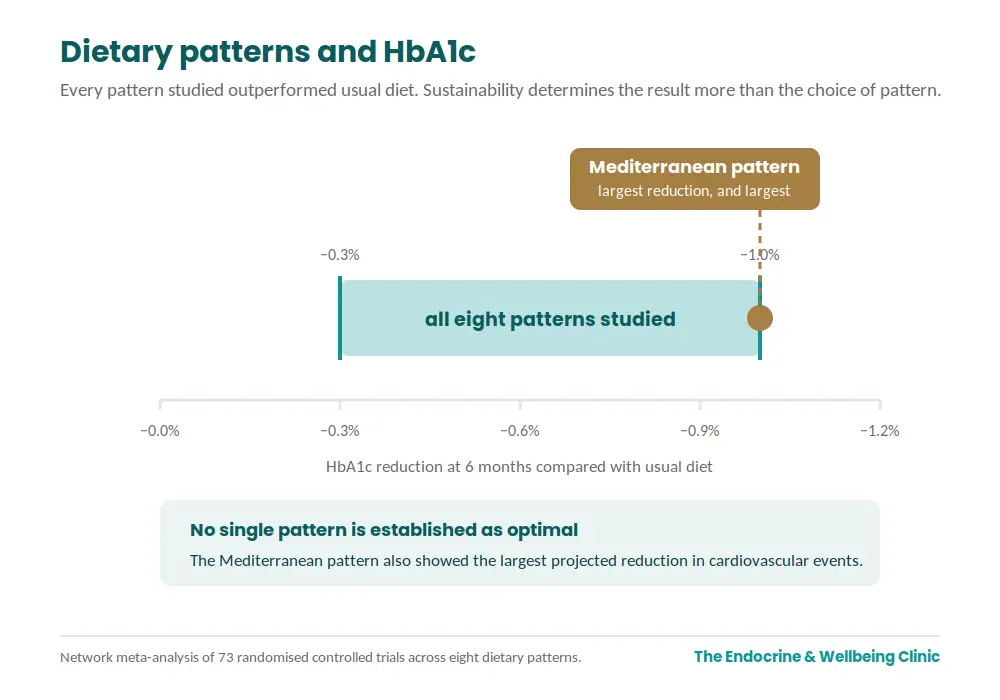
Selecting a dietary pattern. A network meta-analysis of 73 randomised controlled trials examining eight dietary patterns found that all improved body weight and HbA1c at six months compared with usual diet, with no single pattern established as optimal. The Mediterranean pattern produced the largest reduction in HbA1c and the largest projected reduction in cardiovascular events. Over eight years in newly diagnosed type 2 diabetes, a Mediterranean pattern with carbohydrate below 50% of energy reduced HbA1c by 0.5% compared with a low-fat diet, and reduced the likelihood of requiring glucose-lowering medication by 32%. We construct the pattern around what is achievable and sustainable for you, since adherence determines outcome more than the specific pattern selected.
Cardiovascular risk reduction. Mediterranean dietary patterns reduced major cardiovascular events by approximately 30% in the PREDIMED trial of high-risk participants. In type 2 diabetes specifically, meta-analysis demonstrates improvements in LDL cholesterol and blood pressure alongside glycaemic benefit. Practically, this means replacing saturated with unsaturated fats, increasing legumes, vegetables, whole grains, nuts and oily fish, addressing sodium intake where blood pressure is elevated, and reviewing alcohol. These changes act on lipids and blood pressure directly, independent of any change in weight.
Carbohydrate quality, quantity and distribution. Carbohydrate type, fibre content, the amount consumed at each meal and its distribution across the day influence postprandial glucose more than total daily intake alone. This is generally where postprandial readings improve, and it can be achieved without severe restriction — which matters, since highly restrictive approaches are less well sustained and long-term evidence for them in type 2 diabetes remains inconclusive.
Weight, and the question of remission. Weight loss improves glycaemic control, lipids and blood pressure together, and in a proportion of patients is sufficient to induce remission. In the Australian DiRECT-Aus trial, 56% of participants achieved remission at 12 months with mean weight loss of approximately 8%, and in the original United Kingdom trial remission rates corresponded closely with weight lost. Remission is most achievable within the first few years following diagnosis and in those taking fewer glucose-lowering medications, and it requires structured maintenance to be sustained. Where it is a realistic objective we will say so and set out what would be involved; where it is not, weight change remains worthwhile for its effect on cardiovascular risk.
Medications such as semaglutide and tirzepatide have substantially changed what is achievable in type 2 diabetes, and they are used alongside nutritional management rather than in place of it. Two considerations remain. First, a substantial proportion of the weight lost during rapid weight loss is lean mass, which increases rather than reduces the importance of adequate protein intake and resistance training. Second, marked appetite suppression makes inadequate nutritional intake more likely and less readily detected. We work with patients whether or not they are taking these medications, and coordinate with Dr Smith on prescribing decisions.
No single dietary pattern has been established as optimal. Across randomised trials, several patterns improve weight and HbA1c, with the Mediterranean pattern showing the largest effect on HbA1c and the largest projected cardiovascular benefit. Sustainability for the individual is the more important consideration.
No. Carbohydrate quality, quantity and distribution across the day are more relevant than exclusion. Long-term evidence for strict carbohydrate restriction in type 2 diabetes remains inconclusive, and highly restrictive approaches are generally less well sustained.
Because cardiovascular disease is the principal cause of death in type 2 diabetes. Dietary change acts on lipids and blood pressure directly, and addressing these alongside glucose has a greater effect on long-term outcome than glucose alone.
In a proportion of patients, yes — most commonly with substantial weight loss, earlier in the course of the condition, and in those taking fewer medications. We will give you an assessment specific to your circumstances rather than a general claim.
They may require reduction as glycaemia improves, particularly alongside weight loss. This is planned with your treating doctor, which is why we coordinate with Dr Smith or your general practitioner throughout.
The Endocrine & Wellbeing Clinic
Phone: (02) 9870 3256
Locations: Balmain (inner west Sydney) and Telehealth Australia-wide
Affiliated with: Dietitians Australia, Australian Diabetes Society, Endocrine Society of Australia
This page is not a substitute for individual medical advice. Book a consult for assessment specific to your situation.