
Build the strength to train for a marathon or half — and stay injury-free doing it.
Jessica Coombe (AEP) works with athletes across all sports; running injuries are a particular focus given the volume of runners she sees.
We commonly see runners who have signed up for a marathon or half and know what’s coming — every previous attempt to build mileage has ended in shin pain, a grumbling Achilles, or a knee that flares as the long runs get longer.
Others are already in a training block and can feel a niggle developing. They don’t want to stop; they want it addressed before it forces a break. And some simply want to start a build knowing their body can absorb the load — with the strength work done first, not after something breaks.
Common presentations include patellofemoral pain, Achilles or patellar tendinopathy, medial tibial stress syndrome, ITB syndrome, plantar fasciopathy, and bone stress injuries. Where a formal diagnosis or imaging is needed, we work alongside your GP or sports physician — our role is to assess your movement patterns and strength deficits, and prescribe the exercise that corrects them.

Most running injuries are load errors — mileage rising faster than the tissue’s capacity to absorb it. A marathon or half-marathon build is exactly that risk, applied over sixteen weeks. Preparation targets the two factors with the strongest evidence behind them: building the right muscles, and managing the load they’re asked to absorb.
Load management. Most overuse injuries follow a spike in a single session or a rapid rise in weekly volume, applied to tissue that hasn’t been built to tolerate it. Jessica Coombe (AEP) maps your current load, identifies the spikes, and builds a graded progression. Where you are injured, relative rest — reduced volume or pace with targeted work — is usually more effective than stopping completely.
Progressive strength training. Strength training roughly halves overuse injury rates, while stretching shows no protective effect (Lauersen et al., 2014). The effective dose is two sessions a week built around single-leg movements — split squats, single-leg deadlifts, and heavy-slow or eccentric calf raises — which load the calf, quad and glute along the same pathways running uses. Hip weakness is a consistent finding in injured runners and is correctable.

Running assessment and return-to-running planning. We don’t overhaul your running form — wholesale changes rarely help and can introduce new problems. Instead we look at how you run and land to understand where load is going, then correct the contributing strength deficits with targeted work. From there, return to running is built in graded stages — volume and pace increased in planned steps as strength and symptoms allow — so you rebuild toward full training without triggering the injury again.
Bone density and energy availability. Bone stress injuries are often driven by low energy availability — under-fuelling relative to training load — which lowers bone density and raises injury risk (Relative Energy Deficiency in Sport, RED-S). Where the history suggests this, Dr Isobelle Smith can assess bone density and the hormonal drivers, and our dietitian Isabelle (Bell) Smith can address energy availability. Jess is also ONERO trained in bone-loading exercise.
Every program is tailored to you — your goals, injury, symptoms and stage of recovery. What treatment looks like is decided at assessment, not before.
Your initial one-hour assessment includes a detailed history, review of any relevant scans, discussion of your goals, and a movement assessment to identify the factors contributing to your condition. From there, a personalised exercise program is developed and taught with a strong focus on correct technique and long-term recovery.
Depending on your needs, treatment may include one-on-one sessions, small supervised group classes, a home exercise program, or a combination of these. Your program is reviewed and progressed regularly — based on your symptoms, movement quality, strength and functional goals — to return you safely to the activities that matter most.
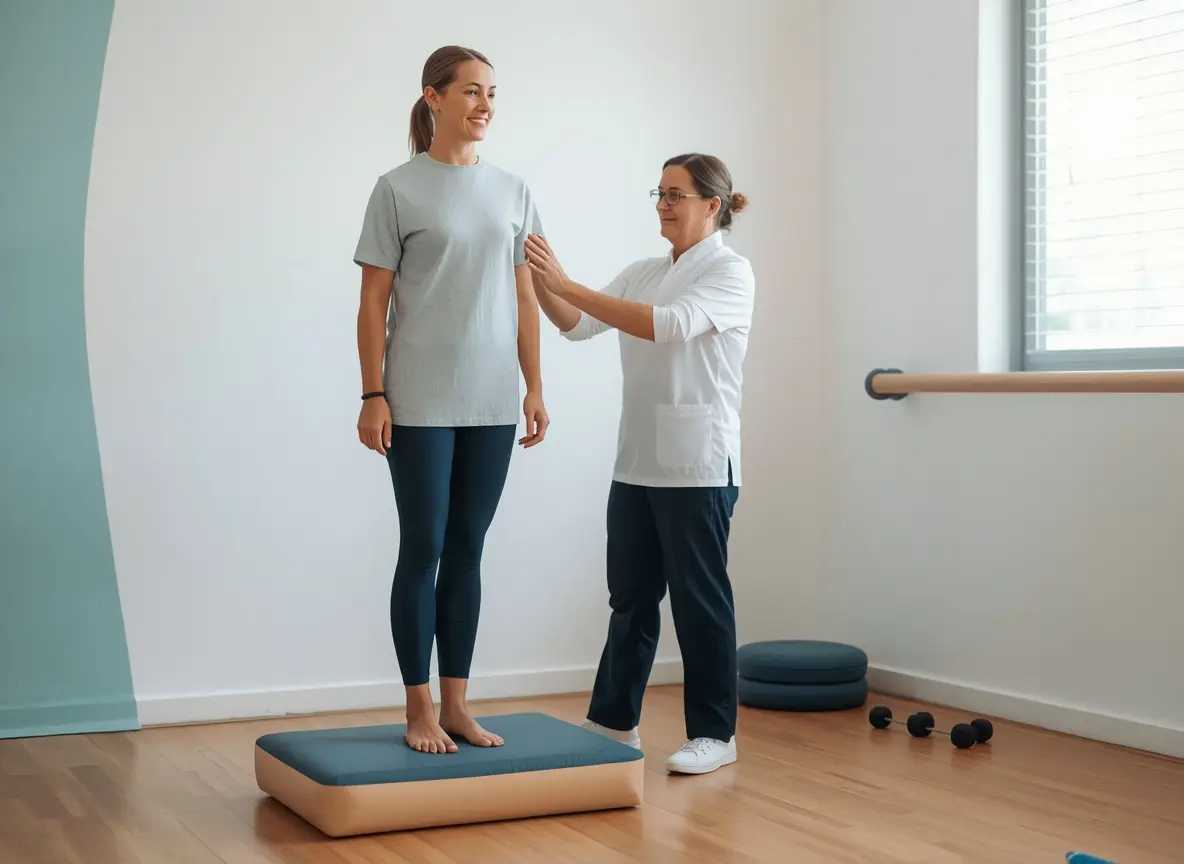
Rest and stretching have a place — rest offloads an irritated tissue, and mobility work belongs in a warm-up. Neither changes the load capacity that allowed the injury, which is why symptoms return when mileage is rebuilt. Stretching in particular has not been shown to prevent overuse running injuries. Where a runner is caught in a rest–return–reinjure cycle, the missing element is usually progressive loading and a training-load plan.
No referral is required to book. If you have a chronic condition, your GP may be able to refer you under a chronic disease management plan for a Medicare rebate — ask us and we can explain how it works.
Usually not. Most running injuries are managed by modifying volume and pace while strength is built and the load error corrected. Complete rest is reserved for the injuries that need it, such as some bone stress injuries.
No. Stretching has a role in warm-up and general mobility, but it has not been shown to prevent overuse running injuries. Strength training and load management have the strongest evidence.
Recurrence usually means the underlying load capacity was never rebuilt. The symptom settled with rest, but the tissue still could not tolerate the training, so it broke down again on return. The fix is progressive loading, not another round of rest.
No. Jessica Coombe works with athletes across all sports. Running is a particular focus given the number of runners she sees.
The Endocrine & Wellbeing Clinic
Phone: (02) 9870 3256
Locations: Balmain (inner west Sydney) and Telehealth Australia-wide
Affiliated with: ESSA (Exercise and Sports Science Australia), ANZBMS, Endocrine Society of Australia
This page is not a substitute for individual medical advice. Book a consult for assessment specific to your situation.